Table of Contents
- Why Sprinkler Overspray Can Cause Permanent Window Damage
- How Hard Water and Summer Heat Work Together to Etch Glass
- Early Warning Signs Your Windows Are Developing Hard Water Etching
- Why DIY Cleaning Often Isn’t Enough to Remove Mineral Buildup
- How Professional Pure Water Window Cleaning Helps Protect Your Glass
- Protect Your Windows with Support from Above & Beyond
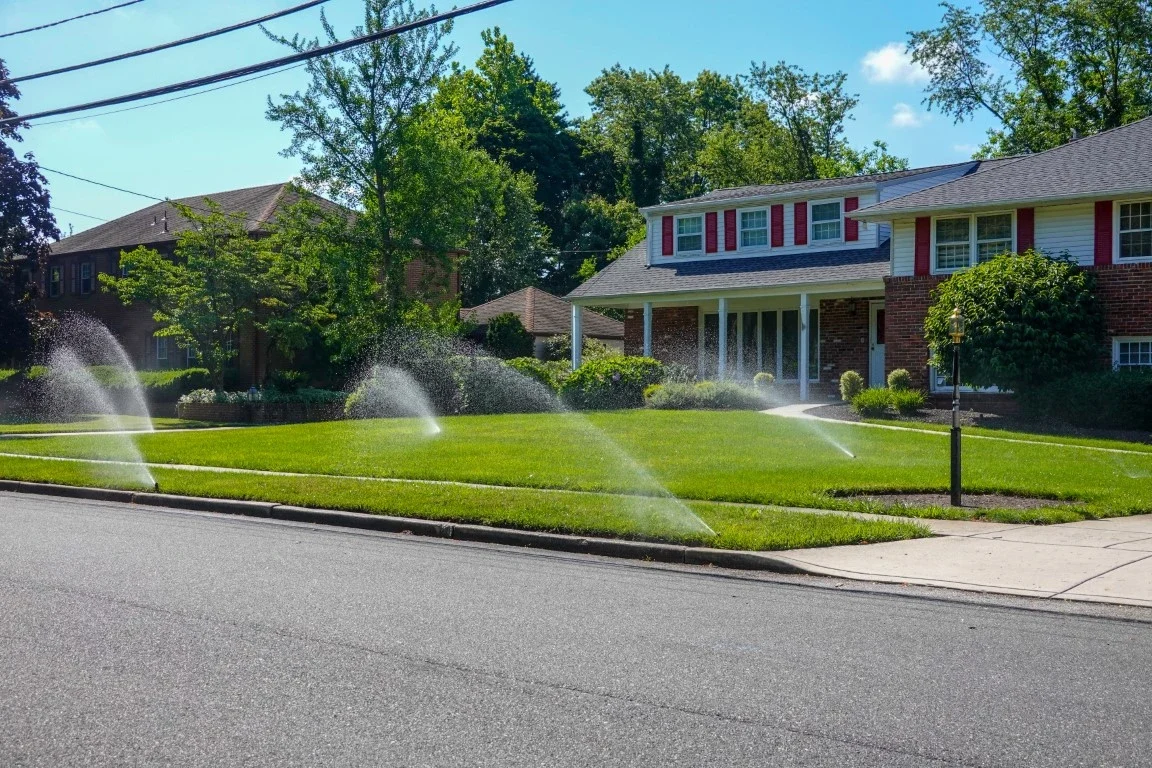
Your sprinklers play a major role in keeping your lawn looking lush and green throughout the hottest months of the year. However, your sprinklers may be reaching more than just your lawn when they’re turned on. Many homeowners may find themselves dealing with sprinkler overspray reaching their windows and doors on the front and back of their homes.
While overspray may initially seem innocuous, the well water your sprinkler system relies on can be the cause for hard water etching on your windows. Catching this etching in its earliest stages can be crucial for protecting your windows from permanent damage? But what should you do when you notice these signs?
In this blog, we’ll help you learn how to identify the earliest signs of hard water etching and teach you more about what you can do to protect your windows from permanent damage.
Why Sprinkler Overspray Can Cause Permanent Window Damage
While the Boston area is known for its soft water, there is a chance your sprinkler system relies on well water. Unlike the city’s water system, this water is known for its high mineral content, which makes it hard. Although high mineral content has some benefits, it can be incredibly harsh on the glass of your windows, especially with frequent exposure.
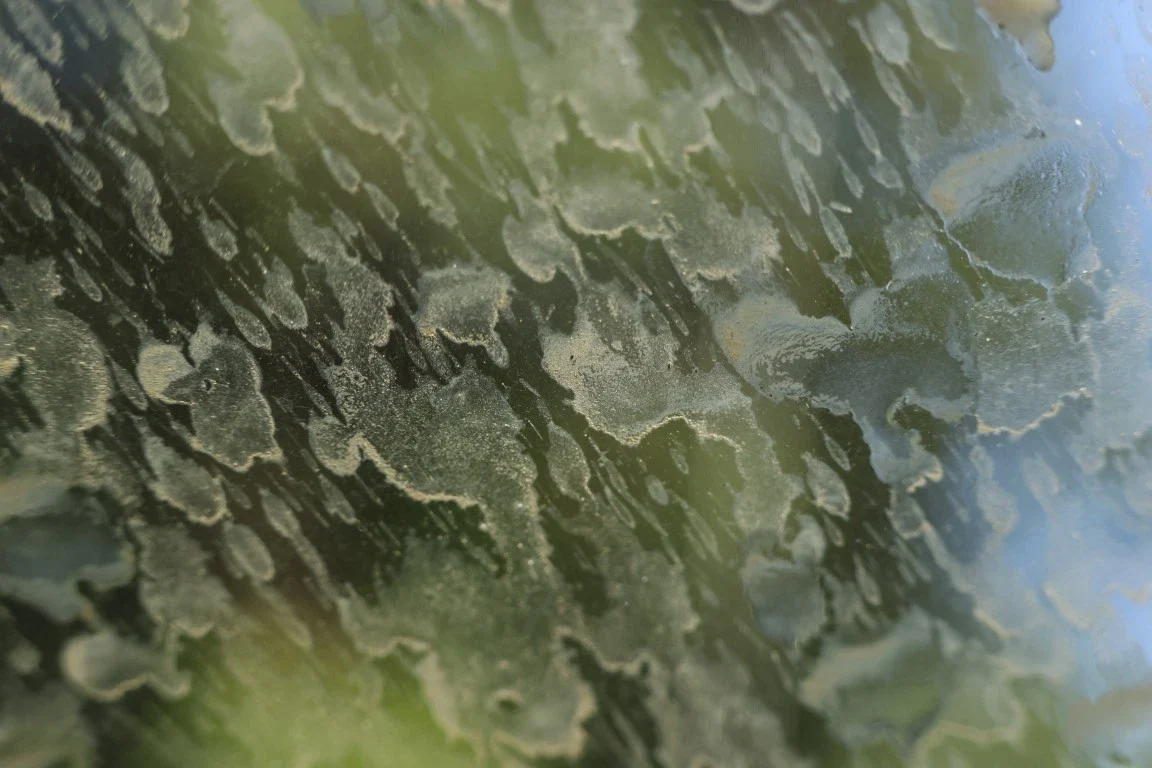
This frequent exposure is incredibly difficult to avoid if it’s coming from sprinkler overspray. The hard water hits your window, covering it in minerals like calcium and magnesium, that is then baked into the glass. As the water evaporates, only the minerals are left behind. If left unchecked, these minerals bond to the pores of the glass.
This bonding is known as hard water etching. As it begins to develop, hard water etching looks like permanent cloudy patches, dull rings, or tiny physical pits in the glass. Not only does this change the appearance of your windows, but it can also change the texture of the glass. Thankfully, with quick action, hard water etching can be prevented.
How Hard Water and Summer Heat Work Together to Etch Glass
Although there is always a minor risk of hard water etching throughout the year, most homeowners, especially in the Boston area, will experience this problem in the summer months. But why is this? During the hottest months of the year, higher temperatures cause the sprinkler overspray to evaporate more quickly than in the spring and fall months.
As the water evaporates, it leaves behind mineral deposits from well water or high-mineral municipal water. These deposits often contain calcium, magnesium, and other dissolved minerals that cling to the surface of the glass. With repeated sprinkler cycles and prolonged exposure to the hot July sun, these minerals begin to bond with the glass itself.
What starts as a few cloudy spots can eventually become permanent etching that standard window cleaning cannot remove. The longer these deposits remain on the glass, the greater the risk of lasting damage, making early intervention essential for preserving the clarity and lifespan of your windows.
Early Warning Signs Your Windows Are Developing Hard Water Etching
Although you may be anxious about avoiding hard water etching, there are several clear warning signs you’ll notice as the process begins. Knowing how to differentiate between hard water etching and standard hard water staining can help you save your windows. If you notice any of the following, you may be dealing with hard water etching:
- White, cloudy hazes that make your glass appear foggy, even after washing.
- A rough, bumpy, or gritty texture when you run your hand over the glass.
- Faint circular mineral deposits where water droplets have dried.
- Spots on the glass that don’t go away, even after using standard glass cleaners.
- A dull, almost matte reflection of sunlight on your windows instead of sharp reflections.

Unlike hard water stains, which can be removed through standard cleaning, etching is permanent. If you’ve noticed small signs of hard water etching on your windows, this is your sign to take immediate action if you want to avoid further, more severe damage.
Why DIY Cleaning Often Isn’t Enough to Remove Mineral Buildup
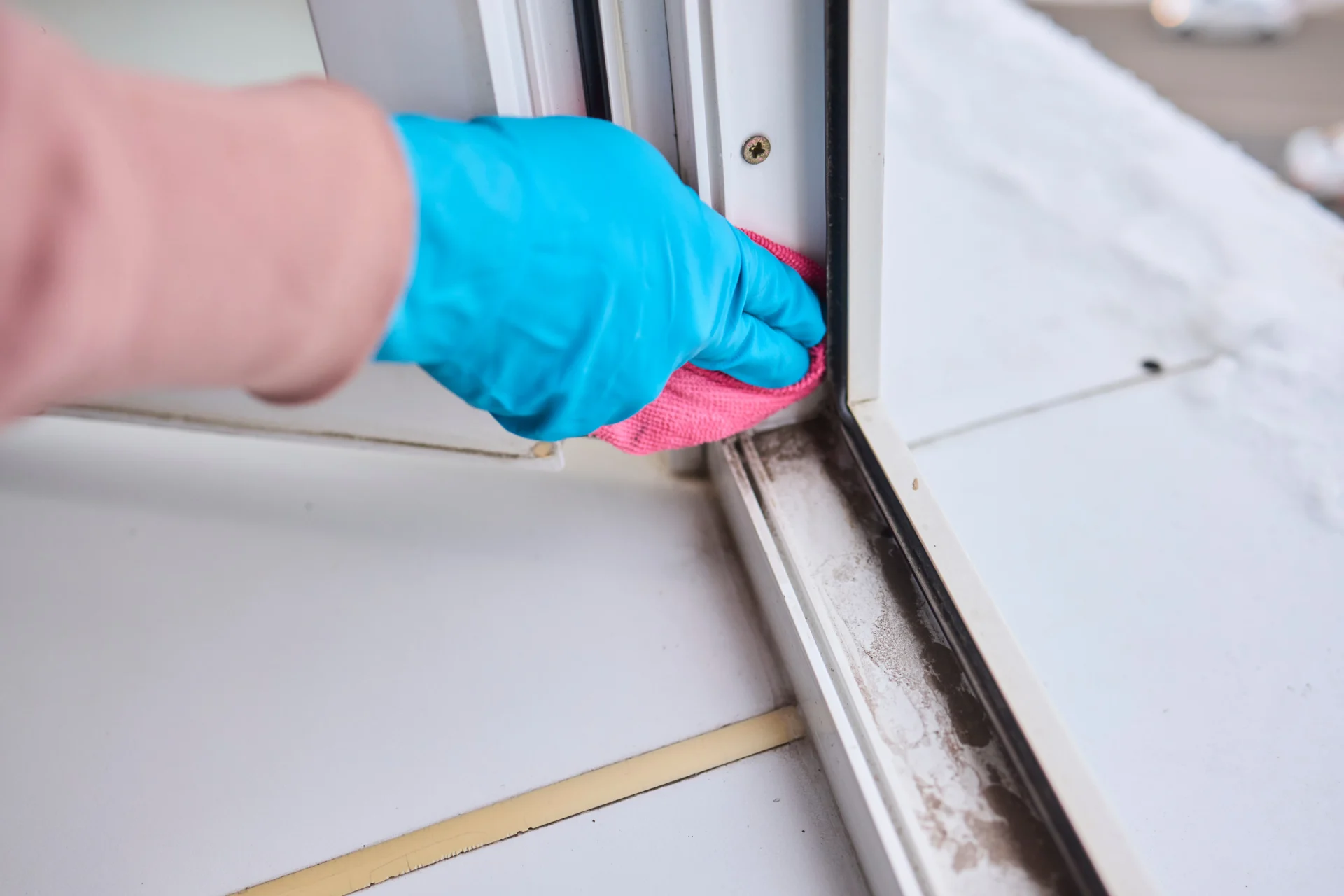
If you have recently noticed early signs of hard water etching, you may find yourself reaching for a glass cleaner, warm water, and cloth. However, this DIY cleaning likely isn’t quite sufficient to deliver the results you’re hoping for. Most standard soaps and all-purpose glass cleaners lack the acidity or chelating agents that can dissolve the calcium and magnesium buildup.
Choosing to use these standard cleaners on the hard water etching on your windows may simply flatten the deposits on the glass. Not only does this not address the problem, but it also increases your risk of dealing with permanent scratching to your glass. That’s why it’s in your best interest to rely on window cleaning professionals for support.
How Professional Pure Water Window Cleaning Helps Protect Your Glass
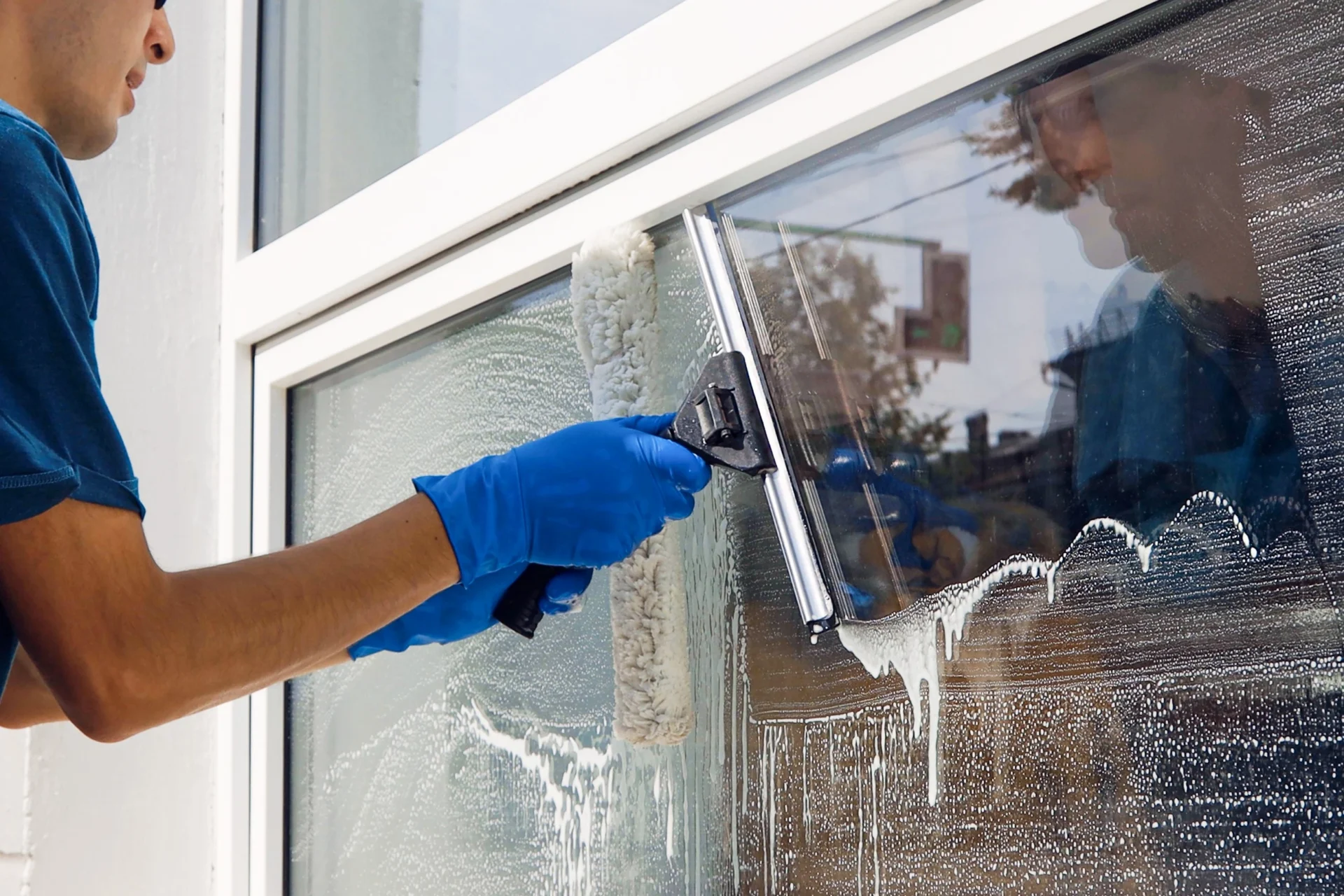
When hard water etching emerges on your windows, it’s always best to contact your trusted window cleaning team for support. But, beyond that, you should look for a team that utilizes a pure water cleaning system. This water is highly filtered and mineral-free, making it the ideal solution for dissolving significant mineral deposits on the glass.
Beyond its ability to tackle the tough hard water problem, pure water is essential for breaking down any soap residue that may otherwise attract grime to the glass. It is also a great option for removing corrosive environmental contaminants that you may find on your glass. This debris is common in high-density neighborhoods, especially in the Fenway and Back Bay neighborhoods.
By investing in professional pure water window cleaning, you can restore your windows’ clarity while helping prevent long-term damage caused by mineral buildup. Combined with adjusting your sprinkler system to minimize overspray, regular cleanings will keep your glass looking its best and protect your home’s curb appeal for years to come.
Protect Your Windows with Support from Above & Beyond
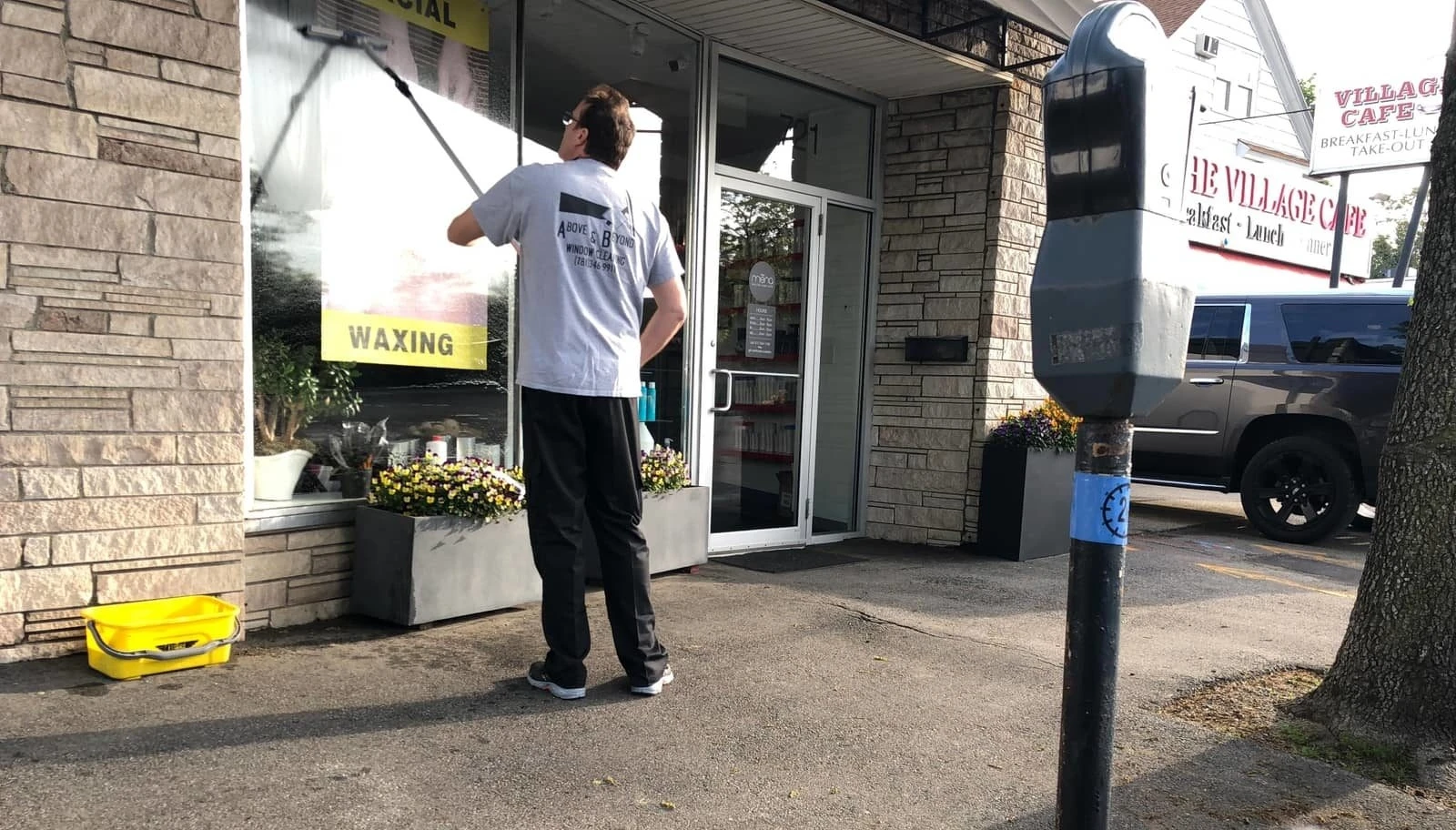
Hard water etching can be incredibly distressing, but it doesn’t have to be. When you work with a team of professional window cleaners, like our team at Above & Beyond Window Cleaning, you’re doing everything possible to keep them safe. If you live in the Greater Boston area and need support keeping your windows safe from significant damage, turn to us to schedule professional window cleaning today. When we’re done, you’ll have sparkling, spotless windows free from major damage or debris.
If you would like to schedule an appointment with our team today, contact us by filling out an online contact form or call us at 781-346-9911.